Saturday, March 18, 2023

Tuh-Duh! Garden Path Progress

Tuh-duh! I completed a gravel path in an area I like to call our wilderness garden in Desert Aire. The plan is to add more walking paths around our two maple trees. A neighbor has called it an arboretum. Many thanks, but it's truly a work in progress. With a park bench placed just so, who knows, it could be a small park. I regret leaving behind two concrete
garden benches at our previous home in eastern Washington. In an effort to downsize, and not wanting to deal with two heavy benches at the time, we now must spend double to replace. Everything has gone up in price! This area also needs a small fence, to keep the tumbleweed from blowing in from the west. You'll notice quite a pile of this in the photo on right. Sigh...more work to do. But stay tuned. When everything leafs out, especially the mimosa (out of view on left), it's a lovely view.

When we first moved to Desert Aire (taking on .6 acres of mostly undeveloped land), the "wilderness" area was my biggest challenge as a gardener. The previous owner had chosen to use the area as a dumping ground for rocks, many of which were quite large. Putting on our thinking caps, Vince decided to use the rocks to widen the road, and so, he built the perfect Scottish wall.

Meanwhile, I explored gardening books and online designs for plant layout. I eventually decided to add a berm in front for privacy, which became home for 2 mugo pines, 2 junipers, 1 pine tree, and smaller evergreen plants in between. “Several 'tiger eyes” staghorn sumacs, 1 blue spruce, 1 mimosa tree (gifted by a neighbor), kinnikinnik groundcover, barberry shrubs, spirea shrubs, 2 more pine trees, 1 fig tree, and two maple trees were planted in the rear and on the sides. Phew! That's a lot of planting.

It's been slow going, as most of the plants were small at first, but slowly everything has taken off after five to seven years of growth. We still have an excess of native rabbit brush and bunch grass (it grows everywhere), which I plan to dig out soon. One nice thing about gravel here is if you place down weed control fabric underneath and have the gravel sprayed, the weeds give up. (Thanks, Russell Landscaping for helping us control the weeds). You can also omit the fabric cover, but only if the gravel is quite deep, three to four inches.

So take a look. I'm patting myself on the back today. 😁

Thursday, March 2, 2023

March Gardening: Let the Adventure Begin

March. So here we are. Another adventurous gardening season in Desert Aire. Those new to the area, don’t despair. There is more here to grow besides sagebrush, bunch grass, and Russian thistle (those pesky tumbleweeds). And to be fair to mother nature, we need those nuisance plants, don’t we? Where else would the quail nest and frolic? I know these plants harbor other critters like snakes, but I won’t go into that much. A bull snake tried to enter our hangar once, so I’ve been on the lookout ever since, but they are harmless (in eight years, Vince and I have never seen a rattler—fingers crossed). 

But back to gardening. Roses, Roses, Roses. These beauties do so well here, in-ground and in pots. If you haven’t already, go out and clip your roses low to the ground to about one foot. Open up the interior spaces so the rose can breathe. Cut way any dead branches and those that cross over where they shouldn’t. There is really no way to do this wrong. Assuming you water, your roses will come back regardless. You just decide whether you want them to look spindly or more compact in appearance. 

Looking for a reliable rose that blooms all year? A friend recently emailed that the Rugosa Rose (on left) never fails. They saw this rose thrive year after year in Washtucna, WA where they lived, which has climate similar to us. This rose is native to northeastern China, Japan, Korea and Siberia. In Siberia it actually grows on sand dunes and beaches. Its hallmarks are beautiful fragrance, soil tolerance, and temperature hardiness. Rugosa roses prefer acidic pH, but it can thrive in the poorest of soils too. One drawback is that once established, the rose will sucker, but if propagation and spread is your goal, this is your rose. Flowering typically comes in late spring and early summer, but deadheading will promote repeat blooming. Flowers grow in small five-petal clusters in different colors--pink, red, lavender and white. 

The rose hip (on left) of the Rugosa rose is also edible, similar to a cherry tomato in size. Not sure about taste, as I have never eaten. Have you?

Fertilize your roses. Rule of thumb is to fertilize when you see green growth. There are rose fertilizers out there, but I usually grab fish fertilizer because it’s handy and seems to work for everything here. I lean toward natural products, but sometimes you need more. Our maple trees for instance have an in-ground treatment this time of year for potential aphids. We’ve never had an infestation, so apparently it works. Aphids will indeed attack your roses and other flowers, but that is easily resolved with insecticide. Again, I prefer natural or organic products. 


Here’s a handy insecticide recipe you can make from scratch:

Mix together: 2 gallons warm water, 1 oz. Dawn soap, 1 oz. Peppermint oil, and 1 oz. Neem oil. For a stronger solution, add 1 oz. Rosemary oil. Spray liberally as needed. This works on houseplants too. Controls aphids, spider mites, white flies, and other pests. The Neem Oil also works as a fungicide for Black Spot, Rust and Powdery Mildew. Spray is safe for ornamental trees, shrubs, fruits, and vegetables too.

So… thinking about one’s reliance on more natural products, treat yourself to some available natural health benefits you can enjoy every day. To detox your body, consider the easiest method—drinking plenty of water. Add some herbal tea, and you have it in spades. For fresh air and exercise, consider an old-fashion walk around the block. You don’t have to jog a mile to benefit or qualify. Eat fresh food whenever possible. Variety is key. 

Try eating kale and other less popular vegetables. Just Google for recipes on how to cook. Be adventurous. That said, canned products need not be your enemy. With a well-stocked pantry, you can save a lot on groceries by stocking up. One can of tomato soup for instance can become the basis for a new recipe by adding leftover or fresh vegetables or even leftover casseroles. “Toss not, want not,” as the saying goes. Growing up with a Depression age mother taught me the value of not wasting food. If you are worried about the sodium, simply use less salt on the added ingredients. Spice things up and you have it. Easy.

Oh…and don’t forget to start your tomato seeds. You can buy later in nurseries too if you prefer. Tomatoes do well in Desert Aire. For best results (my preference), plant in grow boxes with water basins in morning sun (shade in afternoon). Later, add ground eggshell to the water to treat for potential blossom rot. Easy. 

Happy Gardening and Eating everyone! Remember, “Gardening is cheaper than therapy, and you get tomatoes.” (anonymous)

Monday, February 13, 2023

The Popular Banana

Bananas. Okay, first off, we do not grow bananas in Desert Aire. But I love this fruit, don't you? Eaten plain, sliced on cereal, used for banana splits, milk shakes and smoothies, added to fruit salads, mashed in cakes, cookies, and breads, the list goes on. Some use the banana peels for facials and puffy eyes. Gardeners, you can even chop the peels and place on top of the soil to decompose and release nutrients
(please do not place near plant stems for best results 😏)

Banana is the one fruit we most likely take for granted in the supermarket. For me, it's always, "Are we out of bananas?" I seldom leave the small store in Mattawa (Harvest Foods) without a fresh bunch. At home even the overripe bananas get eaten eventually. Frozen in baggies, they become mashed ingredients for muffins, corn bread, pancakes and more. Delicious!

Did you know that a banana tree can grow 10 to 26 feet tall? One cluster alone contains 50 to 150 bananas. Packed full of nutrition, bananas are an excellent source of B6, as well as potassium, manganese, vitamin C, copper, biotin and dietary fiber

Unless you are one of the unlucky ones who is allergic to this yummy fruit, the health benefits are impressive. Cardiovascular protection due to the fruit's potassium and fiber content for one, and protection from ulcers. Further, bananas can help with constipation, and promote good eyesight, bone growth, and kidney health. What's not to like?

Malaysia can take credit for the origin of bananas some 4,000 years ago, where it was first noted. From there the banana tree spread to nearby Philippines and India. Bananas were later discovered in Africa in 1482 and brought to the Americas by Spanish explorers in the 1500s where they planted banana trees in the Caribbeans. But it was not until the 19th century that bananas became available in the United States. Today bananas are primarily grown in Mexico, Costa Rica, Brazil and Ecuador.

Here's a fun Banana Recipe:
🍌

"Banana Dressing with Poppy Seeds"

1 banana (ripe)
1 cup (8 oz.) sour cream 
1/4 cup sugar 
1 tablespoon poppy seeds 
1 tablespoon lemon juice 
1 teaspoon dry mustard 
3/4 teaspoon salt

Mash bananas in a small bowl. Add remaining ingredients and mix well. Chill for 30 minutes. This is great on salad greens, fruit, and as a dip. Yield: 1-3/4 cups. Enjoy!

More fun...😄

Banana Jokes:

Question: What did the boy banana say to the girl banana?
Answer: "You have a lot of appeal."

Question: If a crocodile makes shoes, what does a banana make?
Answer: Slippers!

Banana Movies: (Remember these?)

--Bananas (Woody Allen movie) 1971

 --Herbie Goes Bananas 1980
(Herbie the VW has a wild adventure)

Banana Books:

--Banana: The Fate of the Fruit That Changed the World
by Dan Koeppel (2008) (adult nonfiction)

--Anna Banana: 101 Jump Rope Rhymes
by Joanna Cole and Alan Tiegreen (2010) (ages 4-8)

Banana Songs:

(Beetlejuice fans.......Remember this?)

"Day-O" (Banana Boat Song) by Harry Belafonte
(from the movie Beetlejuice - 1988)


Monday, February 6, 2023

Why I Believe in Garden Gloves

Gardening may be the furthest thing from your mind with chilly mornings and snow dusting the mountain tops not too long ago. There's also that morning “burr” factor when you step outside. But except for our record windstorm in December that took down trees and roofs, winter weather has been somewhat mild compared to the rest of the nation.

My garden shed is calling. I peeked in the other day and saw the insecticide I will soon add to some trees (best done in February). I give two maple trees a special in-ground treatment to ward off aphids. So far, it has worked fine. So, I put on a pair of garden gloves and did the job. I also finished a rock border where the red rock needed to be separated from the gravel. It felt good to be outdoors. The sunshine was glorious. Healing even. It seems only fair with 2020 well behind us now. Never mind the virus is still a problem in places. We need to be aware of those areas, but mostly, I feel liberated with all those shots behind me.

As for wearing garden gloves, if you do not know already, gloves are important!! Some obvious reasons would be to keep the garden chemicals from penetrating your skin when applying fertilizers and insecticide. The stoutest gloves also keep thorns and stickers from poking through and drawing blood. Ouch. I find that welder gloves work extremely well when pruning roses. They are thickly padded and cover your lower arms completely. I'm on a second pair now. So worth it.

Another obvious benefit of wearing garden gloves, assuming there are no holes in the fingers, is to keep your hands and fingernails clean. Important if you have someplace special to go later. Maybe dinner out somewhere nice? A good soak in the tub is the only other option. So, wear the gloves!

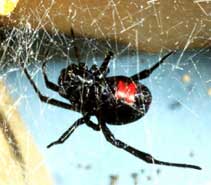
A few summers ago, I came to appreciate an even greater benefit of wearing gloves. Their use in preventing insect bites. We have scorpions and black widows in Desert Aire. Fortunately, the scorpions are not the dangerous kind. I read that their bites resemble a bee sting. Fortunately, I wouldn't know. It's never happened. But yes to black widows!

Black Widow Spider, This file has been released into the public domain by the copyright holder, its copyright has expired, or it is ineligible for copyright. This applies worldwide. 

Black widows, although not normally aggressive, will bite if threatened. I discovered this while checking the cantaloupe vines for fruit. (Cantaloupe grows well here in Desert Aire). But dumb me, I was not wearing garden gloves that day. When the bite came it was a needle-like sting, and left double fang marks on the skin. I instinctively knew it could be serious. I recognized the spider's white silky web a foot or so away. We were familiar with black widows and often sprayed, but apparently missed this one.

I went inside immediately, turned on the computer, and googled “black widow bites.” Already my hand was swelling and hurt like the dickens. I iced it as instructed, swallowed antihistamine and ibuprofen, and waited…watching for more serious signs. Within the hour I felt nauseated and wanted to vomit, thinking it was time to head for the medical clinic in Mattawa, but the nausea passed quickly. No breathing problems, cramping, or numbness followed, which would have definitely meant a trip. The swelling lasted for several days though. So please, take those garden gloves seriously. Don’t let a half-inch spider protecting her eggs convince you. 

Happy Gardening Everyone. Spring will be here soon. If you happen to see me later, running across the lawn like a crazed woman, I probably walked into a spider web. I must admit I'm easily spooked now. 😀

Sharon Himsl


Thursday, February 2, 2023

Heather - Oh What a Beauty

HEATHER. If you happen to have this rewarding small shrub in your garden, the bees will soon be buzzing around its pink flowers enjoying the nectar immensely. Right next to your yellow forsythia also in full bloom when spring finally arrives. Spring, isn't it wonderful? Oh, how I long for its return, don't you? When the trees bud out and the warm air soothes. Then again... It's February. But still, I can daydream. Won't you join me?

After admiring my neighbor’s pink heather one day, I knew I wanted one in my rock garden. I now have four in the ground and will likely add more. The tidiness and hardiness of this shrub is admirable. As an evergreen, heather is attractive all year long and does well in Desert Aire. I have yet to notice any insect problems.

Heather is a low-spreading shrub that grows to about two feet tall, three feet wide. My neighbor and I have pink heather, but the colors vary a lot (e.g., red, white, and purple). Over the winter the foliage on mine has a purple hue, but this too can vary. There are hundreds of species of this cultivar to choose from.

Heather can tolerate poor, rocky soil, but like other evergreens, it prefers acidic soil conditions. You can plant heather in pots as well. Just make sure the potting mix is “evergreen friendly.” To make your own potting mix, combine 50% peat moss, 20% perlite and 10% each of garden soil, sand, and compost (or farm manure). Early spring (coming, I promise😏) is a good time to plant heather. You can locate in full sun or light shade. You can also plant during the Fall. Once established, heather is pretty much maintenance free. 

In Victorian times, white heather was gifted to friends and young lovers💑 for luck and protection. Scottish brides always carried heather for good luck, when walking down the aisle. Similarly, purple heather represented beauty, admiration and solitude. The tradition continues to this day. 

Canadian poet laureate Bliss Carman (1861-1929) wrote, “Here's to the day when it is May. And care as light as a feather. When your little shoes and my big boots. Go tramping over the heather.” 

Happy Gardening Everyone! I'll be tramping over the heather in my daydream till spring arrives, when I hope to plant more of these gems.

Thursday, March 31, 2022

April: Invest in Your Garden

Colored eggs sitting pretty in a basket. Chocolate goodies hiding in the grass. An Easter egg hunt for the kids and grand kids. Church on Sunday, a sunrise service. A special family meal. The scent and vision of Easter lilies everywhere. These are the things I think of this time of year.

April is also the month of Earth Day (April 22). Begun in the U.S. in 1970 at the urging of Senator Gaylord Nelson of Wisconsin, promoters of Earth Day strive to increase awareness of environmental damage being done to the earth. The theme this year is Invest in Our Planet, but taking this a bit further, why not make it, Invest in Your Garden? The advantages of having a garden are well known. It improves the air we breathe, produces fresh food, and beautifies a property and the community, but consider the exercise of gardening itself... Gardening exposes us to natural vitamin D, decreases dementia risk, and is a fantastic mood lifter. It can be an enjoyable aerobic exercise for pent-up anxiety too—just resist thinking of gardening as work. As a creative outlet, gardening can be a great inspiration and a special time to think.

Gardening combats loneliness. Gardening friends come in all shapes, sizes, and types, those friends, family, and neighbors who garden or appreciate our plant/food offerings at the end of the season. There are the admiring glances of strangers walking by. The plants and animal life we encounter are also friends (at least for me). I love watching the world wake up around me. The tiny lizards peeking out from their winter caves in the stone borders and rocks. The wildflowers, the early bloomers like my pink heather and forsythia. The perky daffodils, tulips, and other bulbs. Their fresh faces are all reminders that life really can start anew.

All of nature comes alive in April. Soon the honeybees will be buzzing my crab, pear, and service berry tree blossoms in search of nectar. Robins will perch in the trees looking around, while some on the ground listen for worms. Black birds (did you know crows are as smart as a seven-year-old?) will gather on rooftops and simply hang out. Geese will fly overhead doing acrobats in the sky and the pelicans will return to the lake.

We have quail too here in Desert Aire, lots of them. Best I can determine, they are California quail (or valley quail). Did you know that the males and females of this species mate for life? Both parents care for the chicks. I look forward to the mamas and papas, their head plumes (top-not feathers) bobbing up and down as they scurry about with their tiny chicks one behind the other in tow. So-so cute.

I suppose the aphids are waking up too. The other day I found myself thinking that aphids have a right to eat too. Ha-ha. I know, I know, this is how my mind works. I'll pull out my homemade insecticide, the one made with Dawn soap, vegetable oil and water. It repels aphids and other insects, but I doubt if it kills very many. I'll need to spray the infestation at least a couple more times. My gorgeous snowball bush suffers the most. Then there is the invasive grass taking over my garden right now. A new remedy to try (barring Roundup) will be extra strength commercial vinegar, arrived from Amazon today. I’ll tackle our grow boxes next, the only successful way I’ve been able to grow vegetables successfully here without those invasive “helmeted” squash bugs, but then that’s another story. Happy Easter everyone and Happy Gardening too. We shall see if April showers bring May flowers this year. I suspect we will have all turned on our sprinkler systems by then. Farmer’s Almanac predicts a-warmer-than-average spring.


Tuesday, March 15, 2022

March, A Time To Think Green

MARCH. The month we wave goodbye to winter and think about those left-behind gardening projects. The weather is perfect for weeding, digging up and replanting bulbs, transplanting shrub/plant babies (those freebies we sometimes get), in-ground insect treatment if you haven’t already (trees and shrubs), planting seeds, and rethinking those outdoor pots. Indeed, March is the ‘green’ month when not wearing green on a certain day guarantees a pinch or two.

 St. Patrick’s Day, celebrated every year on March 17, is a fun day to ‘think green’ and that includes shamrocks (three-leaf clovers) and four-leaf clovers. I have a long history with clover. Memories of crawling on the grass as a four-year-old, as my mother gardened nearby, in search of the infamous four-leaf clover comes to mind. Patience was key but persistence always paid off. “Found one!” I’d shout. A rare find though. For every four-leaf clover found there are some 10,000 three-leaf clovers. Ireland prides itself as the country having the most four-leaf clovers. It’s the “Luck of the Irish” they would say, and in case you didn’t know, the four-leaf clover represents Trust, Hope, Love and Good Fortune.

Ever wonder why we pinch each other on St. Patrick's Day? The pinching tradition was started in America in the 1700s by Irish immigrants. They claimed that wearing green made them invisible to the leprechauns, those mischievous little fairies who liked to play practical jokes on people.

As for Saint Patrick, a 4th century Roman Catholic saint, it’s said he used the green shamrock as a teaching tool to explain the holy trinity to Irish Catholics. People started wearing green after he died (March 17, 461 A.D.) to celebrate his memory. Celebration of St. Patrick's Day in Ireland predates the 1600s and became a holiday in America in the 1700s.

St. Patrick (Patricius) was born to a rich landowning family in Britain near the end of the 4th century, where exactly is unknown. During a raid of his family's land by Irish pirates, he was captured at the age of fifteen and taken to Ireland, where he was enslaved for six years. After hearing a voice in a dream, telling him how to escape, Patricius managed to flee his captors and return home. It was the basis of his religious conversion to Christianity. St. Patrick then returned to Ireland as a priest and missionary (around 430 A.D.), where he stayed for many years spreading Christianity everywhere he went. Tens of thousands were baptized and hundreds of churches were established all over Ireland.

 St. Patrick's Day is celebrated in Ireland with parades and family gatherings, and to some degree in the U.S. Parades are held in larger cities here and stores often stock up on corn beef and cabbage in preparation. Likewise, senior centers and similar places serve Irish Stew on the menu. I happened to be in Spokane once, before the pandemic, with streets barricaded and people lined up for a big parade. Kids (mostly) and adults in the crowd wore festive green costumes.

 As a child, I remember a gentleman walking through my neighborhood playing his bag pipe on this holiday. In grade school my classmates and I must have cut out dozens of shamrocks. We had fun pinching each other when we forgot to wear green. Then we listened to our teacher read stories about leprechauns and ate cookies with green frosting our mothers had baked. 

 So, before you think about removing clover from your grass, think Irish and four-leaf clovers. Did you know that some plant clover from seed in pots? It’s also considered an excellent ground cover as a natural fertilizer to improve soil. It attracts pollinators too. On the Westside clover grows quite well with all that moisture. But go ahead, try outdoors. It’s how we learn. Guessing though you would have more success indoors, where you can mist the clover and control how much sun it gets. And…don’t forget on March 17th to wear green. Happy Gardening everyone

Friday, March 4, 2022

Marigold, the Bold Flower

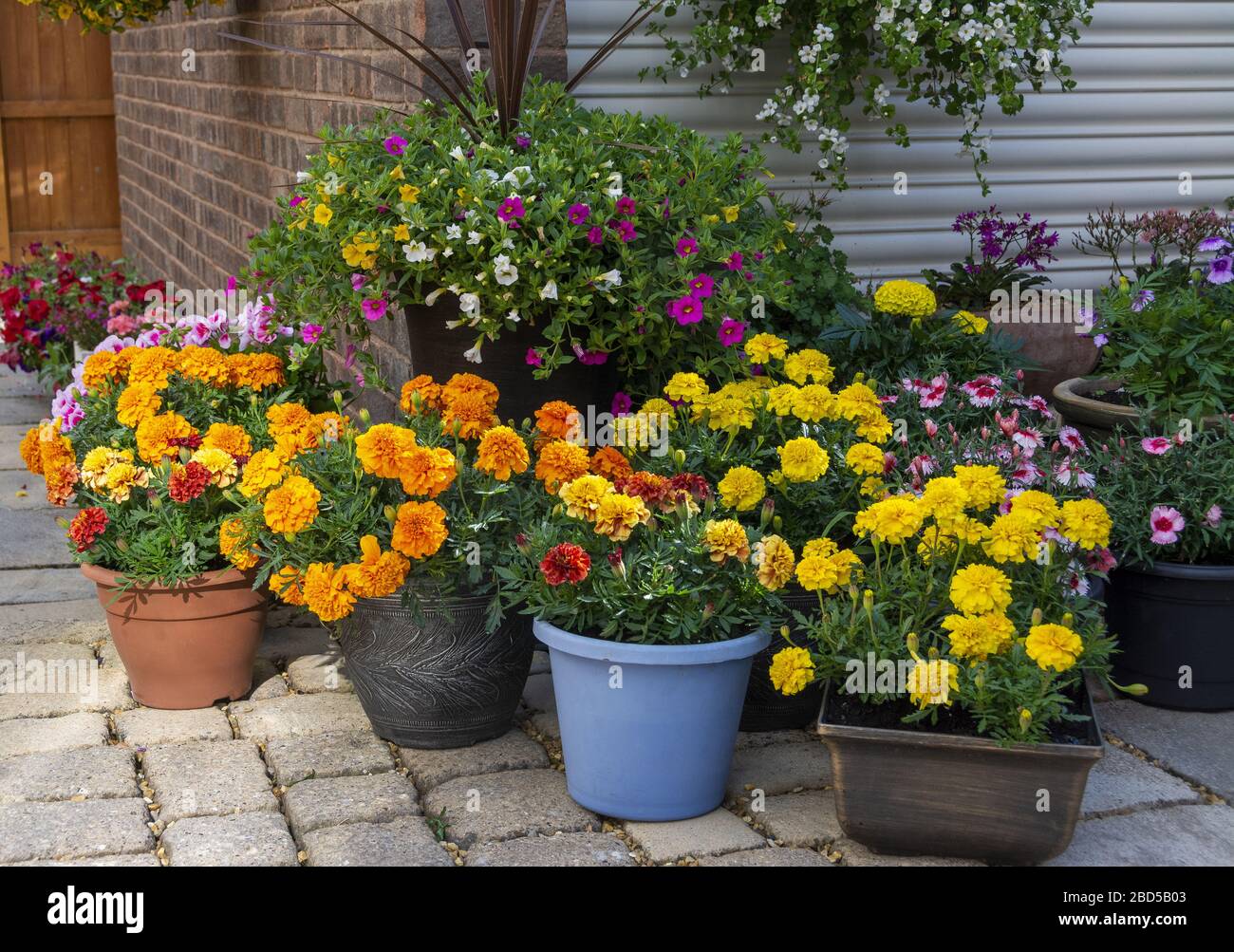
Flowers Pots Marigolds High Resolution Stock Photography and Images - Alamy

Marigold, the bold flower that aims to please and one you should consider planting in Desert Aire gardens. They do especially well in pots. Just remember that our desert sun can be tough when plants are young, so moist fertile soil is a must. I add a little peat and compost to hold in the moisture. Mine do well on the East side of the house even without much care, where it's shady in the afternoon. Just be careful not to place pots too close to the driveways where heat (in the morning) can build up rapidly. But done right, you will be blessed with a gorgeous display. Marigolds come in vibrant colors--yellows, oranges, reds and maroons--with sizes ranging from 6 inches to an amazing 2 feet tall. 

Swedish botanist Carl Linnaeus officially recorded marigolds in 1753, but records exist dating back to the Aztecs in the 1500s. Today the flower is used in the Mexican ‘Day of the Dead’ celebration to honor those who have died. Elsewhere, in Nepal for instance, marigolds play a role in worship and rituals, while in Thailand and India, marigold garlands are woven for weddings, festivals, and religious events. 

In the U.S. some marigolds are used to flavor and color food, and have reported health benefits, such as alleviating cramps and aiding digestion. Relief for nausea, stomach ulcers and menstrual discomfort is reported. Marigold eases headaches and can help one sleep too. A tea can be made for cold compresses and used in baths for relaxation and as an anti-inflammatory. I would warn though that the details of how this is done should be thoroughly researched. Try at your own risk of course, as the saying goes. Online there is a warehouse of information.

Perfume makers further use the marigold's oil to make a desirable scent. The flower is quite strong actually, a bit smelly at first sniff, but at just the right amount it really works. I recall liking a perfumed cream made by Avon years back that I believe was made with marigold. I've missed it over the years. Songs, poems, and stories all capture this flower's beauty as well. 

Native to North and South America, marigolds come in annual and perennial varieties. For non-gardeners out there, annual flowers have one life cycle. The seeds are sowed in spring, the plant blooms, and then dies, whereas perennial plants live more than two years. I have only seen annual marigolds in local nurseries here, but frugal gardeners can easily grow marigolds from seed. If you plant in pots, many will reseed the following season on their own from the seed pods left behind.

Most marigolds have a strong, unattractive scent, as pointed out above, but there are some species that are bred to be scentless. However, I’m fine with the “stinky” variety, since I've learned that a little in the right amount does wonders. I also like that scented marigolds are a natural deterrent to deer, rabbits, rodents--and insects in particular. This includes white flies, nematodes, mosquitoes, Mexican bean beetles, squash bugs (oh my, a nemesis of mine), thrips, tomato horn worms, and more are supposedly repelled. So, plant away, I say. 

Just protect from our hot sun. Marigolds prefer afternoon shade here and plenty of
moisture. Happy spring gardening everyone! “It does not matter if you are a rose or a lotus or a
marigold. What matters is that you are flowering.” (Rajineesh)

Friday, May 24, 2019

The Smart Gardener, Being Firewise: Part II


This is a rewrite of an article I wrote for The Man in March, 2019. Looking back, I'm wondering if a better title might have been "The Smart Gardener." With last summer's fire season far behind us now, it's easy to forget just how awful it really was in
Central Washington. The smoke was so thick, Vince and I had to buy three Hepa filters just to
breathe. We didn't take our boat out on the lake once. Eventually the smoke infiltrated all of the Pacific Northwest, so there was no place to escape. We weathered the hot summer inside. Of course, California was far worse and we all know how tragic that became. Suffice it to say, summer 2018 was no fun.

I'm thankful for the wet spring we have had thus far. As I mentioned in "Being Firewise, Part I," dry evergreen shrubs can be real fire torches, especially the popular arborvitae. Before I continue, let me say how much I love these evergreens. Well-groomed and not allowed to grow too tall, they beat back the wind and provide privacy naturally. We have a dozen or so on our property!

Sadly though, once ignited they burn extremely hot and fuel those dangerous fire brands (sparks) that travel in the wind during a raging wildfire. This is no different than burning sagebrush, which burns hot from the oil in its scale-like leaves. Furthermore, the dead growth that accumulates in the interior of arborvitae is perfect kindling.

There are approximately nine species of Arborvitae. Most of us know them as Thuga (those tall shrubs that grow 15 feet or more), Juniperus (the large low-growing shrubs), and Cedrus (these are trees). Best to keep this evergreen at a good distance from the house, should you choose to plant. Maintenance then becomes critical, especially during fire seasons.

The best rule of thumb is probably “awareness.” Know what to watch for in a fire if you have this evergreen. Don’t let your arborvitae or similar evergreens dry out. If one dies, please cut it down. This advice applies to all pines and firs. Meanwhile, clean out any dead leaves accumulated underneath the plant and power hose the interior to remove other dead residue.

Next, prevent your arborvitae from becoming too tall. Snip the new growth on top and the sides every spring. There are also ways to prune a too-tall Thuga without destroying its shape permanently. This can be done by cutting the top and tying the sides to form a cone shape on top, although it might take a couple of years to reshape.

Here’s a helpful link that explains: http://www.gardenatoz.com/what%27s-up!/big-mistake,-big-lesson/arborvitae-too-tall/#overall.

Other evergreens to avoid when planting near the house are pine, fir, larch, spruce, yew and hemlock. Shrubs include bitterbrush, sagebrush, mugo pine, and yew. Grasses include pampas grass and cheat grass. After hearing this recent advice at a Master Gardening class I admit I was pretty discouraged. In the end it helps to remember Voltaire’s famous saying, “perfect is the enemy of good.” Well, I will do just that, because we can only do so much. If nothing else, I can always plant flowers!

Happy Gardening Everyone!

Wednesday, May 1, 2019

Being Firewise. Protecting Your Home - And Your Neighbor's

My arborvitaes planted too close to house :(


Firewise Landscaping. Part 1. 
I recently attended a Master Gardening class in the Tri-Cities, where Desert Aire’s Garden club members (we call ourselves ‘Earth Angels’) and other gardeners received some excellent instruction on various topics. The keynote address, “Firewise Landscape,” really got my attention.

Firebrands flying in the wind during a fast-moving wildfire are the biggest fire threat here in Central Washington, we were told. Firebrands can travel fast, up to a mile in the wind, which makes all of us vulnerable in windy conditions. It's easy to imagine combustible materials on our properties catching fire easily. Some of us witnessed this firsthand last summer, as the wind pushed a wildfire perilously close to our homes. Later we saw on the news a devastating fire that destroyed an entire town and took lives in California.

So what exactly are firebrands? This was new terminology for me, but actually we've all seen these fire igniters before. Think of the sparks and hot embers that rise up in a large bonfire. These are firebrands. You know the kind of fire. Those large bonfires on the beach, or as some of us may remember, those bonfire rallies in high school just before a football game. I remember shaking the sparks from my hair over the years. I'd laugh and jump back when I got too close.

Today though in our ongoing dryer climate, fire has never been a more serious threat, which brings me back to the speaker's topic. Being firewise. Some of the smart things we can do to protect our property and that of our neighbor's.

1) Separate plants with noncombustible material (stone, gravel, rock, etc.) where possible. 

  
This includes keeping our yards tidy and well-pruned too. Where organic mulch is desired, keep this area far from house. Six feet or more is recommended.

2) Use firewise materials when building or remodeling (roof, siding, dual-pane windows, etc.).

Wood and vinyl fences are safest when connected to a house by a metal gate/section. One of the speakers, who was a fireman, explained that fencing can catch a home on fire. Vinyl structures (e.g., pergolas) can safely be a foot or so away, because in a fire, these melt as opposed to flaming up...but still get hot.

3) Create a defensible space around your home with three landscaping zones.

Zone 1:  

In this zone plants are placed 0-5 feet from house if you have flame-resistant siding, but 5-10 feet from house if you have non-flame-resistant siding. Plants should be low-flammable varieties (e.g., ground covers, vines, sod grasses, bulbs, perennial/annual herbaceous plants).

Zone 2:  

Plants are 10-30 feet from house. Plant well-spaced broadleaf evergreens, turf/non-turf grasses, deciduous shrubs/single trees. Mature trees are pruned up 10 feet and planted 30 feet from home. Avoid evergreens in this zone.

Zone 3: 

Plants are 30-100 feet from house. Keep yard debris and fuel at a distance in this case. Create firebreaks with low-growing ground covers, deciduous shrubs, and trees (pruned up), broadleaf evergreens, and non-turf grasses.

4) Lastly, consider the impact of your landscaping on neighbors.
Arborvitaes are not firewise, I’m sorry to say. I planted some too (we all did), but these are like torches in a wildfire. Keep these moist and correctly pruned. Yes, you can prune. Next post will explain.

So, now we have a goal at least. I know I came home a bit discouraged at first, but determined to make some positive changes. Next post, I’ll talk about ways to make arborvitaes and similar evergreens less fire-prone.
 

HAPPY GARDENING EVERYONE!

Remember, “Without hard work, nothing grows but weeds.” (Gordon B. Hinckley)


Friday, March 22, 2019

Peanut Butter Isn't Just For Jelly

The peanut butter sandwich has been around forever. From from what I can tell, it has long been an American tradition. And since March is National Peanut Month...

Believe it or not, peanut butter was once a delicacy in the United States, and fresh vegetables were very much a part of the sampling. In the early 1900s, peanut butter could be enjoyed at elegant New York City tearooms, where it was often served on crackers with pimentos, nasturtium, cheese, and fresh celery and watercress.

The creation of peanut butter itself dates back to 1896, when Good Housekeeping (a popular magazine at the time) suggested that women grind their peanuts into a spread and use on bread. Later that year, another magazine, Table Talk, published a recipe for the peanut butter sandwich. Few though enjoyed these sandwiches, as peanut butter was mostly a delicacy of the privileged and rich.

It wasn't until the late 1920s that peanut butter became affordable and more available to the general public. It was only a matter of time before it became a kitchen staple, helped by the fact that children loved peanut butter and jelly. During WWII, the peanut butter and jelly sandwich was even added to U.S. military rations. Peanut butter had come a long way from the tearooms of New York City.

Today peanuts can be purchased in bulk at some grocery stores and ground on site, but most of us buy our peanut butter in the jar. 


So here are some of the sandwiches I have made over the years: Peanut butter and...

- jelly (jam, preserves, marmalade)
- honey
- pickles
- bananas
- potato chips

- brown sugar

Wanting to include more fresh vegetables (and fruits) in my diet, I tried the following:

- Peanut butter and sliced apples
(with peelings) and sliced almonds. (really liked)
- Peanut butter and cucumbers. (liked)
- Peanut butter and left-over salad (without dressing). Hmm.... this was a bit of a stretch.

The salad had leaf lettuce, kale, yellow pepper, broccoli and carrot slaw, dried cranberries and walnuts. (just okay; too messy)

Here are more suggestions:
(note to daughter: no peas! 😏)
 

-zucchini
-green, yellow, and red pepper
-onion
-avocado
- parsley
- grated carrots
- mint
- spinach and other greens
- pineapple slices
- sliced strawberries
- blueberries

- other berries and fruits

And the tearoom list:
- pimento
- nasturtium
- cheese
- celery
- watercress

From online, others have tried:

- raisins
- bacon
- chocolate
- maple syrup
- hazelnut-chocolate spread
- marshmallows

Nuts would be good too. Or... try sprinkling ground chia seeds and flax seeds on your peanut butter for added fiber.


How about you? Do you have a favorite?

 [History Source: http://en.wikipedia.org/wiki/Peanut_butter_and_jelly_sandwich].

Thursday, March 7, 2019

Hydroponic Gardening: A Winter Refuge for Gardeners

Gardening in the closet!

Hydroponic Gardening. Uh...that's produce grown without soil, for those who don't know. I certainly didn't at first. The good news is you can grow vegetables inside your home over the winter, which has hung on far too long in my opinion.

You'll have to forgive my obsession with winter, but with snow drifts still deeper than my boot tops and snow again the other night that left the roads icy, I'm a bit grumpy in my desire for spring. I need a convincing few days of warm sunshine but of course, it will come eventually. And Saturday I attend an all day master gardening class with three other Earth Angels. Winter doesn't stand a chance!

Meanwhile.... back to my winter gardening project. My interest in hydroponic gardening really began with a community course taken years ago on how growing food in water atop a fish aquarium. No soil, just water, grow lights, and best of all--built in fish fertilizer. It sounded perfect at the time, but without a basement or a spare room (or an aquarium) to set up this operation, the idea fell to the wayside as impractical.

Thanks to a new hydroponic kit ("Aero Garden"), a gift from my daughter at Christmas, I now have salad at my fingertips. Set up was easy. My kit came with seed pods, fertilizer, and LED grow lights. Add water, set the timer, and you are reminded when to add water and feed. Easy peasy. I’m growing lettuce, parsley, and dill, but you can grow other vegetables like tomatoes and peppers, as well as flowers.

One problem at the onset was the extremely bright light. The seedlings require 16 hours of light, which in my case destroyed the ambiance of the room at night. Easily solved... I now have vegetables doing quite well in a spare closet. 


To sum, here are the disadvantages: ‘too bright’ lighting, costly setup (although I didn't buy the kit), the need for electricity, and the occasional replacement when LED lights burn out. Some would include power consumption, which is high in large scale operations, but with only six seed pods in my unit, I haven’t noticed an increase in our bill.

Advantages are obvious: ready-to-pick salad ingredients when store-bought produce runs out, zero pesticides, disease free plants (so far), and high yield. I'm going on three months, which is about max for one seed pod. I’ll most likely keep this going over the summer too, as lettuce tends to bolt here in the heat.
Happy Gardening everyone! 
 
I like gardening – it’s a place where I find myself 
when I need to lose myself.” (Alice Sebold)